

NURSING & CARE TEAM
A coordinated hospice team around the patient and family.
Hospice care brings together different professionals who communicate, plan, educate, and respond to the patient’s changing needs.
INTERDISCIPLINARY CARE
Different roles, one shared plan of care.
Hospice is designed as a team-based model because serious illness can affect physical comfort, emotions, family responsibilities, practical needs, and spiritual concerns. The specific team members involved depend on the patient’s needs and plan of care.
The patient and family remain central to the process. Team members communicate with one another so care is coordinated rather than fragmented.

WHO MAY BE INVOLVED
A team matched to the patient’s needs.
- Hospice nurses who assess needs, provide education, and coordinate care
- Physicians and medical professionals who support clinical oversight
- Hospice aides who may assist with personal care when included in the plan
- Social workers who help with emotional, practical, and family concerns
- Spiritual care professionals when the patient or family desires support
- Volunteers and other hospice team members as appropriate
- Bereavement professionals who support loved ones through grief
HOW THE TEAM WORKS
Communication is part of the care.

Assess
The team evaluates physical symptoms, care needs, caregiver concerns, and other factors affecting comfort and quality of life.

Coordinate
Team members share information and align services around the individualized hospice plan of care.
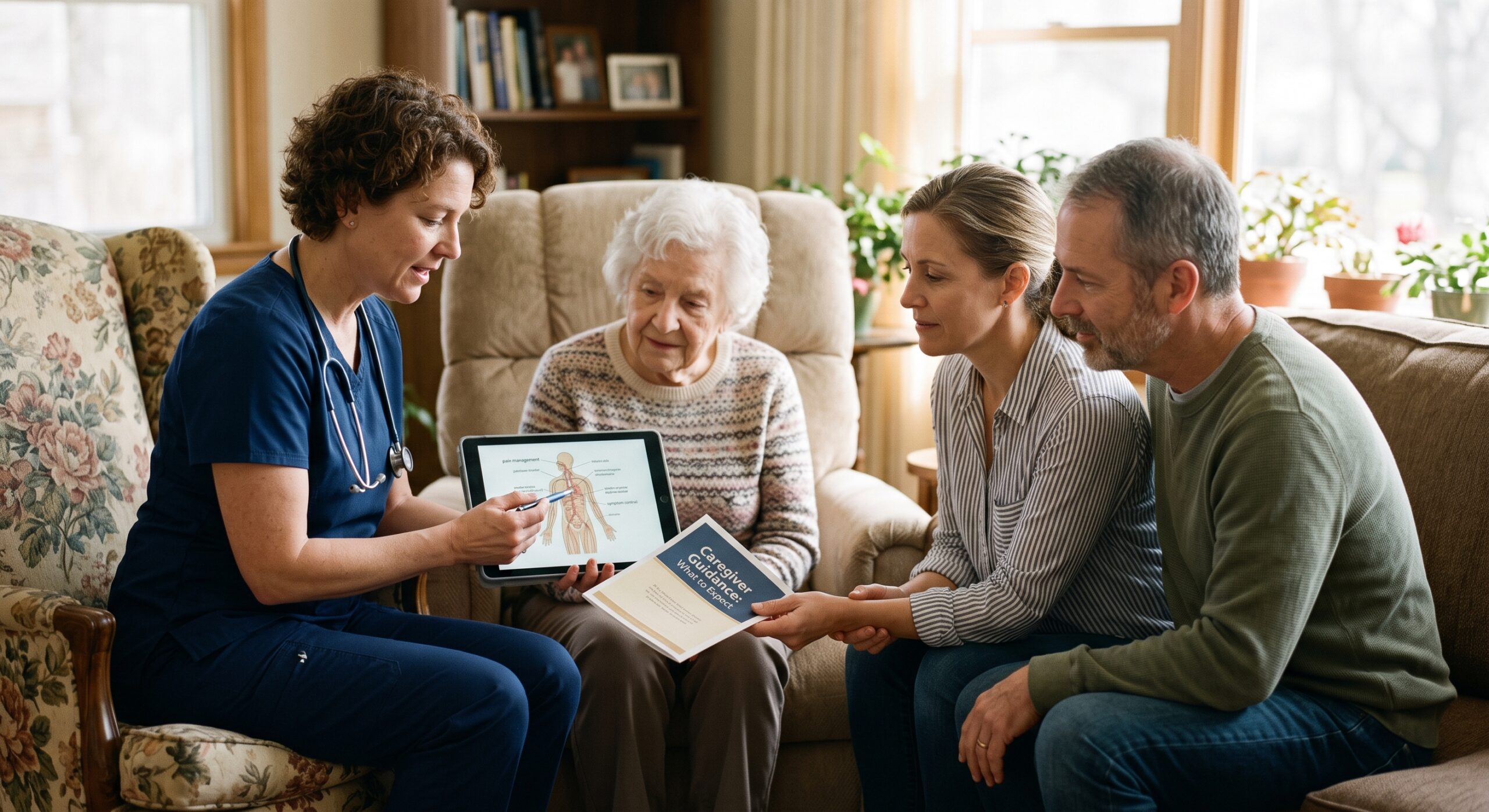
Educate
Patients and families receive clear explanations, caregiver guidance, and practical information about what to expect.
WHAT FAMILIES CAN EXPECT
Support that adapts as needs change.
FAMILY PARTNERSHIP
Caregivers are part of the conversation.
Family caregivers often have important observations about symptoms, routines, preferences, and changes in condition. The hospice team encourages questions and provides education so caregivers understand the care plan and know when to call for help.
Hospice does not expect families to become clinicians. The team’s role is to guide, teach, support, and respond.
You should not have to coordinate serious-illness care alone.
Talk with our team about how hospice professionals can work together to support the patient and family.
or email us at care@metromedhospice.com